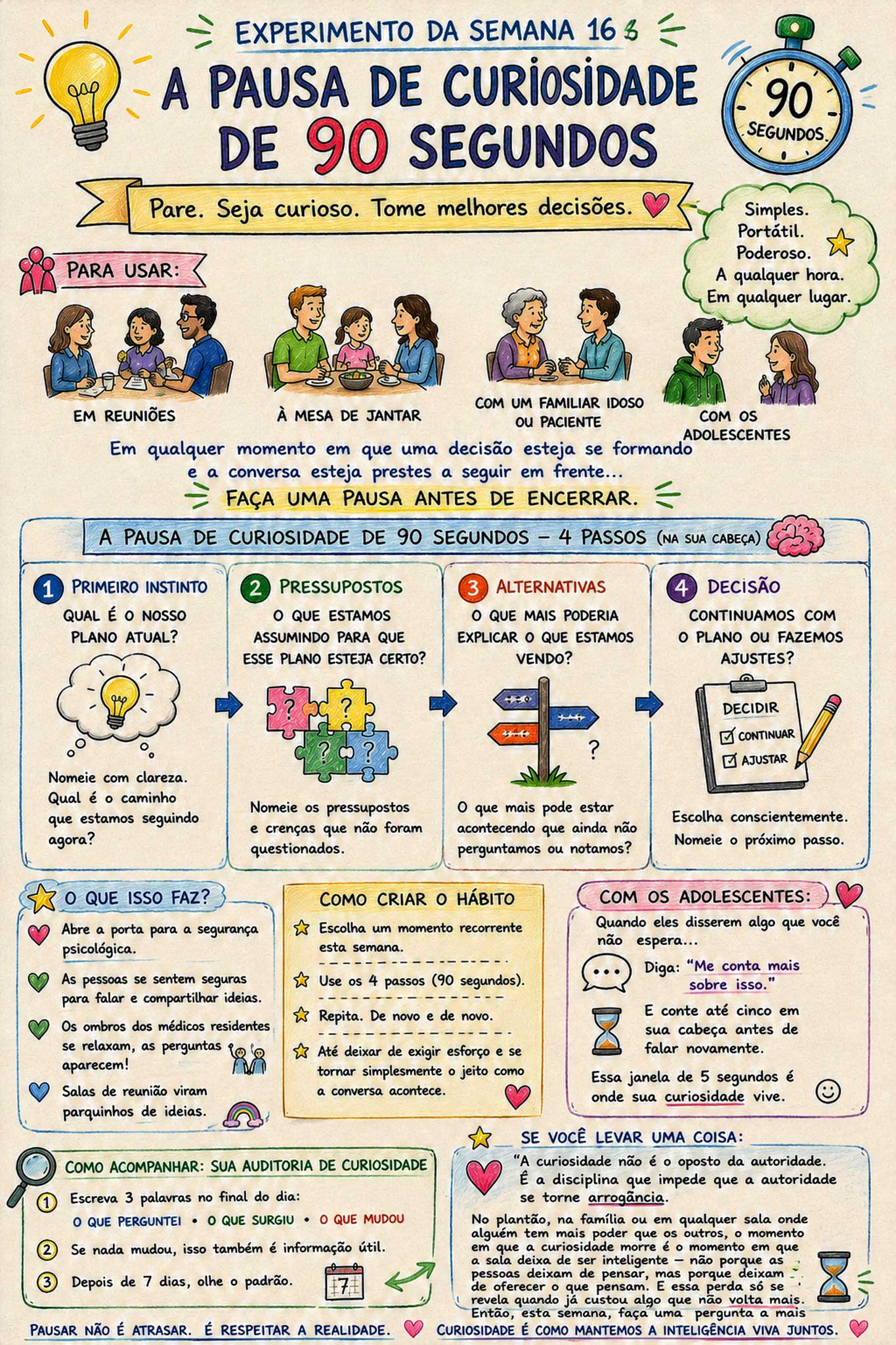
Para visualizar o pôster desta semana em português, clique aqui: Semana 16: A Pausa de Curiosidade de 90 Segundos.
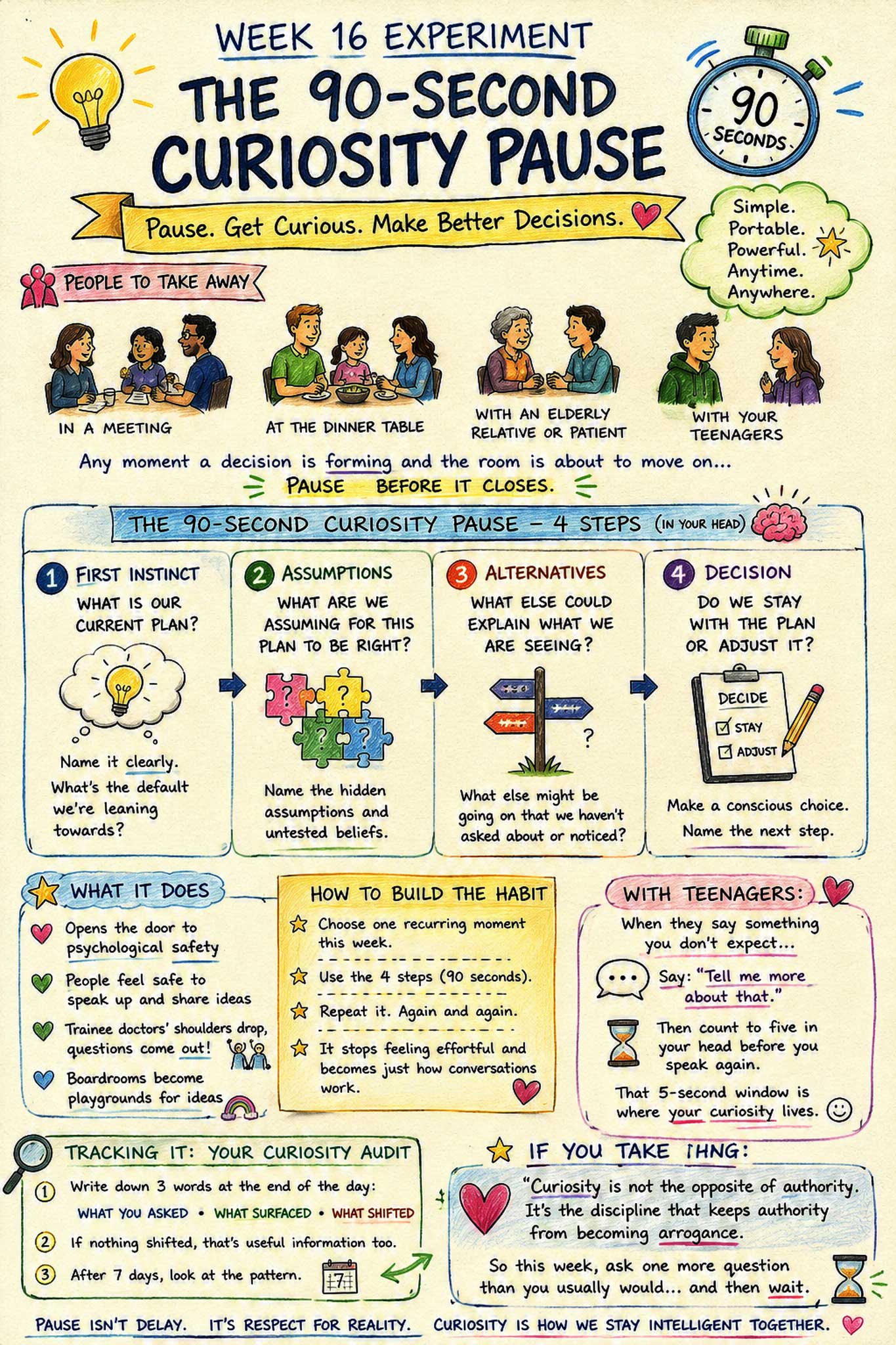 This week Dr. Toomas Särev turns our attention to curiosity — not as a personal trait, but as a clinical and leadership skill. He opens with a sharp observation: the moment a working diagnosis forms, everyone in the room relaxes, the plan sets, and curiosity becomes friction. The person who asks "but what if it's something else?" is no longer seen as contributing — they're slowing things down. When speed becomes identity, questions start to sound like delay, and teams learn without anyone saying it out loud that the safest contribution is the fastest familiar answer. But as Toomas reminds us, curiosity is how a team stays intelligent after the most senior person has spoken. This week's experiment is The 90-Second Curiosity Pause — four steps you can run through in your head before any decision closes: name the current plan, surface the hidden assumptions, explore what else might explain what you're seeing, then decide whether to stay with the plan or adjust it. Use it in a ward round, a meeting, a family conversation, or with your teenagers. Track it each evening with three words — what you asked, what surfaced, what shifted — and after seven days, look at the pattern. As Toomas puts it: curiosity is not the opposite of authority. It's the discipline that keeps authority from becoming arrogance.
The audio of this segement of Dr Sarah On Call.